Energy Conservation
Energy Conservation
Energy conservation is an important factor in mitigating climate change. The Alternative Energy sources of S.A. Engineering College are made for implementation and efficient utilization of renewable energy for non-renewable resources.
Energy conservation is frequently the most cost-effective solution to energy shortages, as well as a more environmentally friendly alternative to increased energy production. An alternative Energy source offers the opportunities for student’s community to engage in initiatives for contributing to environmental protection.
Solar Energy System
Solar energy conversion describes technologies devoted to the transformation of solar energy to other (useful) forms of energy, including electricity, fuel, and heat. It covers light-harvesting technologies including traditional semiconductor photovoltaic devices (PVs), emerging photovoltaic system.
Solar Panel Specifications:
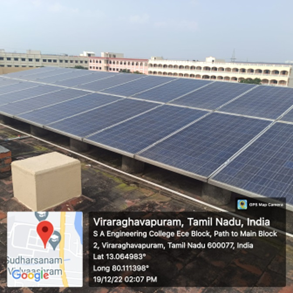
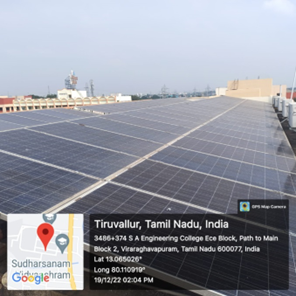
Solar PV System capacity CSE & EEE Block - 108.2 KW
CSE BLOCK: 20KW Solar System
Technology: Polycrystalline Photo Voltaic Module
Generation Capacity: 20 KW, 80 Modules with 250 Wattage Each.
EEE BLOCK: 88.2 KW Solar System
Technology: Polycrystalline Photo Voltaic Module
Generation Capacity: 88.2 KW, 294 Modules with 300 Wattage Each.
Inverter capacity/make: 50 KW / Delta
Sensor based Energy conservation
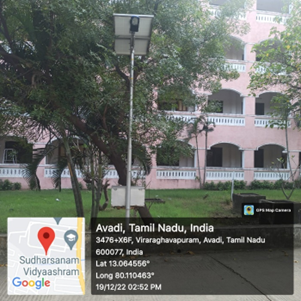
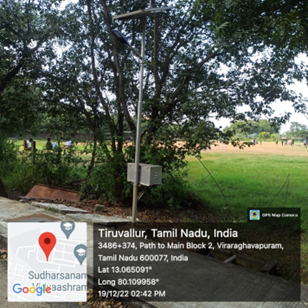
In SAEC, sensors are used to control street lights which helps in energy conservation. Sensor Based Solar Lights are installed in the college premises.
PV Sourced Street Focus Lighting Systems
A photovoltaic-sourced street lighting system is most promoted nowadays for illuminating a street or an open area of rural and urban places. This system improves the efficient utilization of energy consumption with the addition of suitable sensing and control devices. The main components of the above system are the PV panel, Battery, Sensor, DC-DC converter, power electronics Inverter, and real-time Timer. Here we propose a day-light sensor that opens the circuit electrically during the sunlight’s visible time period and closes the electrical circuit. The battery is used to store the energy obtained from the Photovoltaic array during the high sunshine time period and a suitable DC to DC converter is used for charging the energy.
Use of LED Bulb
LED lighting is very different from other lighting types such as incandescent and CFL. Key differences include:
- Light Source: LEDs are tiny and can emit light in a range of colors. A mix of red, green, and blue LEDs is sometimes used to make white light.
- Direction: LEDs emit light in a specific direction, reducing the need for reflectors and diffusers, making them more efficient.
- Heat: LEDs emit very little heat compared to incandescent or CFL bulbs.
- Lifetime: LED lighting products typically last much longer — 3–5x longer than CFLs and up to 30x longer than incandescent bulbs.
They are used in large numbers in Admin office, reception, seminar halls, and corridors. LED lights are fitted on the roof walls in all the places.
Operation of our system works: –
An on-grid solar system, also known as a grid-tied solar system, is the most widely deployed form of rooftop solar system. These systems do not need any batteries and are connected to the utility grid power. An on-grid system is designed to first allow solar energy to be consumed by the SAEC. Beyond this, if the SAEC needs any excess power, it is drawn from the grid. If the SAEC energy requirement is lower than power generated from the solar system, excess solar units are exported to the grid. This is possible through a ‘Net-meter’.
© S.A. Engineering College (Autonomous). All Rights Reserved. Design by